
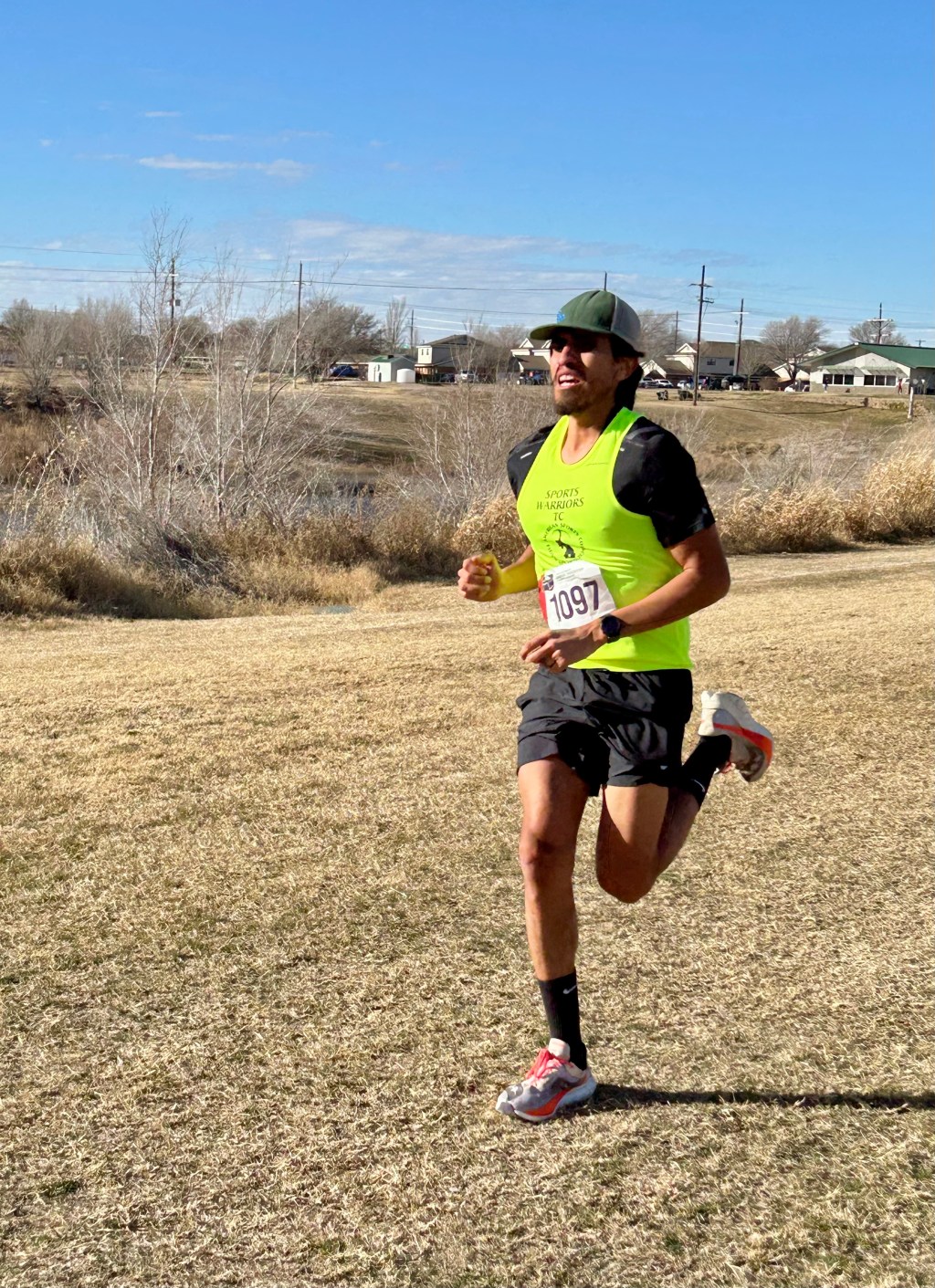
Back in January of 2025, I ventured with a friend of mine to Lubbock, Texas for a race competition. My friend was part of a running group that meets together and runs races across the country. Upon arriving at the hotel where we would stay, I got to meet one of his running mates and made a new friend, Mackenzie. After getting to know the guy and seeing him compete—I knew I wanted to know more about his story and what he does. Therefore, a couple months later we set up a phone call for him to share his story on my blog. So, without further adieu, here is Mackenzie’s story:
Born and raised in Norman, Oklahoma, Mackenzie is half Kickapoo and Irish. He has lived in the state of Oklahoma all his life. In fact, he went to college at Oklahoma City University (OCU) and has been living in the city post college. He is currently a Student Advocate for Western Heights School District-Indian Education. He is a big supporter of healthy living and supporting youth programs. Now, I didn’t know any of this at first glance; instead, all I knew of this guy was that he ran races like my other friend. It wasn’t until after we began talking that I understood the depth Mackenzie had for community outreach and healthy living; it was a honor to hold this conversation with him.
So, my first question was, What does running mean to you?
“[Running] is mostly for health and wellness and fitness. So I come from a running background. [My parents] were a big part of me getting into running when I started training—I had as most Natives have, you know—I had dyslexia. I had troubles in school when I was younger. So I remember in elementary school I really liked PE and physical effort, because I knew in the classroom it was frustrating and I felt like I didn’t have any control. But then I knew outside, if we were running or playing a game or whatnot, I was in control. I could put as much effort as I wanted to put into it, and so it’s kind of why I fell in love with running. It gave me an outlet that I could grow into; versus other aspects of life. In elementary school, I started running, and then, you know, I loved basketball for the hustle and the results when I was in middle school. And then in high school, I made a pretty big jump from being like a decent runner to like the one of the best runners in Oklahoma, and that gave me my start for my college aspirations.
I ran in college and I studied marketing, but I was mostly there just to compete. I was blessed enough to have a full ride, so I didn’t have to worry about finances or anything—just focus on training and school. I graduated from OCU with a Bachelor’s in Marketing in 2018. And I did have a job. So I did marketing and graphic design. I had a job there for like a year and a half after college. I was doing graphic design work for a small marketing agency, and it was a desk job—you know, it was a nine to five with low interaction with other people. And I was super unmotivated by work. I liked graphic design and I like creativity, but you know that kind of work hustle and pace that you’re in and just being at a desk all day—it definitely took its toll on me.
You said your current work contains a creative outlet. Was graphic design and marketing the creative aspect that led you to where you are at now?
I would say not so much. Mostly my history with running is what got me to where I am now. Because, I got a call, like a year after college, from a friend of mine and he knew me from the Native running scene. He said, “Hey, there’s a new charter school that’s opening up in Oklahoma City called Sovereign Community School, and it’s going to be geared towards urban Native youth. And they need a cross country track coach. Would you be interested?” And so that’s kind of what got my foot in the door with working in schools and education and more with Native youth.
Oh okay, what do you like about this job?
Well, I don’t currently have that job now. But that was the catalyst that got me all my connections into the Native community in Oklahoma. And also, it gave me a lot more purpose with my career. Because, like I said before, when I had that desk job, I felt so lost, like I was just unmotivated by work. I was like, what motivates me? I’m not a very money motivated person. Like, if I can get by and I’m comfortable, I am in paradise. I value my free time a heck of a lot more than I value having excessive wealth. I mean, it’s a good thing to make good money and be financially comfortable, but I’m not a very money motivated person. As I’ve grown up, I’ve become more and more anti-capitalist. But yeah, so that’s kind of what got me in the door with education and working with the urban youth, coaching at that school, and then they hired me to be their health and wellness teacher there; that’s where I started to learn more and more about the preventable health issues that are very rampant in Native communities.
Interesting. What are those health issues?
Well, the ironic thing about our day and age, Living-in, as I always call it, is the age of convenience. Like convenience is nice, but at the same time it’s not how humans are supposed to be living. For instance, preventable diseases like diabetes, heart disease, high blood pressure, and some cancers are caused just by, you know—you can prevent dementia, just by walking more throughout the day. There’s a lot of problems we have in Indian Country that are preventable through lifestyle changes, and that’s kind of what I would be preaching to my kids when I was working at the school. And that’s really where I found my passion. I was like, this is something that I’ve kind of been doing my whole life, and now I’m doing more and more research on it and finding out that the science is backing up a lot of the theories that I’ve had in life; preventable stuff like heart disease, diabetes, overall wellness, mental health—like I taught holistic health. So we talked a lot about, you know, depression and anxiety; these issues and this younger generation, Gen Z, have the highest percentage for depression and anxiety. And this has to do with our technology; but it also has to do with the sedentary lifestyles of most people. And so that would always be my main point to get across to the kids is it’s not about grinding in the gym and like killing yourself every day. It’s just about how to have a healthy lifestyle—it’s just light, frequent movement. And like, if you can incorporate that in your life, you’re going to be saving yourself a lot of trouble as you get older.
You would recommend that for like, all ages, correct?
Yeah, for sure. Like, I mean, that’s kind of something that I always like to say. Like, exchange the word exercise for movement. Don’t think about exercising as, you have to go to the gym or you have to run five miles. Think about it as, how much movement have I done today? And there was an NPR research study that showed that to prevent certain cancers, and a lot of these problems we’re having in the American health population, is a lack of walking for 15 minutes [every hour], and just slight movements like that. So, yeah, but definitely for our youth. I mean, I’m a big advocate for getting young people involved with sports, or just community type of team sports, because I emphasize a lot about physical health and mental health; there’s a lot to do with your social connections and the people you have in your life, and the kind of conversations you have with people—that has a lot to do with how you feel mentally as a person.
So, tell me more about your current job.
I’m a Student Advocate. What that translates to is pretty much like a counselor and a tutor. We do cultural lessons and field trips. It’s pretty fun, because I don’t necessarily have to manage a class of kids. I don’t have the demand of lesson planning that a normal teacher would have or grading, you know. So it’s definitely a unique job, but I think it’s pretty important, because I feel like we need more and more support staff personnel in our schools. Because, a lot of our classrooms are kind of—you know, 25 kids is like [generally perceived as] a smallish class. A lot of classrooms have about 30 kids. Oklahoma is ranked 49th in the State for Education. So I’m seeing some of the worst of the worst, like, in terms of the quality that we’re providing our kids, and a big part of that is classroom size. And so we need more staffing, but we also need extra staffing for those more at-risk kids you know; those kids might not have mom or dad or even relatives that they live with. We have a large population of homeless kids that go to our school and they’re couch surfing, or they’re living with friends. So a lot of our kids have a lot of challenges at home, but that’s why I also teach health and wellness to these kids too. I’m their cross country and track coach, but I always try to remind them that, yeah, I’m all about, “Let’s go win this or let’s go dominate!” But in reality, this is a healthy lifestyle choice that we’re making. I’m trying to try to teach [them] that running doesn’t end when you graduate high school or college. Like running is a lifestyle, it’s a healthy activity that you can incorporate throughout your life, and that can help you have a higher quality life, especially as you get older. It can prevent you from maybe going down a path of substance abuse and different risks that we face as Native people.
Do you have any specific strategies in moving the community forward?
Yeah, I would say I do a lot of different work with different organizations in Oklahoma City. A major one that I’ve helped with and have been partnered with for a couple years is a group called Native Farming Solutions. Their overall goal is wellness, and that was the reason why the sovereign community was founded. The parents took surveys in the community, and the biggest concern for parents was their child’s overall wellness. It wasn’t their reading scores or their math scores. It was like my child is depressed and I’m worried about this, or my child is obese and they’re seven years old—I’m concerned. These were the main concerns of our community, of our Native parents, and so that’s kind of been my mission is to try to help our youth, specifically our Native youth. You find those avenues of having a healthier lifestyle and being, and then giving back in their own way when they get older. So, we do that through gardening projects, like I’m always about going outside—working with your hands, working with the soil, not only is it good for the earth, it’s good for you. And a lot of things, a lot of parallels are there between what’s good for our planet is good for you; you know, getting outside, working with your hands, building pollinator habitats, growing your own food. So we do a lot of work like that with our urban youth in Oklahoma City. That’s my overall goal; is to try to improve wellness for urban youth, or just Native youth in general.
Very cool. In regards to gardening, what’s your favorite plant? What’s your favorite vegetation that you like to plant?
I think one of the coolest ones that I just learned about these past few years is Amaranth. It’s a beautiful red plant that grows like a weed. It’s really hard to kill. Technically illegal to grow, but because it’s a weed, but also the seeds that are on amaranth. There’s like thousands of seeds that grow off this food. They’re like, super food, super nutritious. So it’s like, kind of like a chia seed. So a lot of Hispanic tribes, like in Mexico, they would use amaranth like corn, or it’s important as corn, you know. So it’s a plant that has been said, could feed the world, like, if there was a massive food shortage, amaranth could save the world. But it’s ironic that in America, under capitalism—not to say that that had something to do with it, but just in that individualistic, consuming culture, they were like, we need to eradicate this plant. And if there’s no [market] demand, how are we going to make some money? These people were fed and healthy, and they don’t need us, and there’s no market. So not that that was the reason, but it really was, because it’s a very strong plant that, like it’s kind of grows like a weed, because it’s really easy to pop up. So amaranth is a really cool one. If you haven’t heard about amaranth, look into that plant, because apparently it could save humanity, if need be.
Awesome! Well, do you have any final words for anybody who wants to, you know, get more into a lifestyle of wellness and how they can have a better life?
I would say, you know, the overall goal is healthy routines. Consistency is the goal. So that means, like, I might not get a big workout today, but did I do anything? Did I go in today? Did I get something done today? So try to not fixate on just big efforts, but try to celebrate small efforts, like going on a walk and stuff. I would say what helps a lot also is wellness groups. Like, go find a community of you know, walkers, runners, bikers, cyclists and find a community, an active community. Find an activity that you like to do, and then find the community for that activity. Pickleball has been blown up, and Pickleball is great because Pickleball is a user friendly tennis. You know, it’s like tennis, but it takes a lot of skill, obviously, but like, you don’t have to bust your butt as much as you’re playing pickleball, as you do with a bigger game like tennis. Not only is that going to help your physical wellness, but those social interactions and connections you build are going to help your mental and social wellness too. And I think a lot of people these days have these issues that our ancestors didn’t have mentally. And I think a lot of those are caused by isolation, kind of like loneliness. And really, those social connections are really helpful to make you feel better about yourself and you know where you’re going in life. So I recommend finding the activity that you like to do that gets your body moving, and then try to find a community that you can practice that activity with. Growing with the community is a big part of it, you know, and I think as we move more into an uncertain future with climate change and potentially more infectious disease outbreaks, potentially fascist government complete takeover, which means social programs might be completely wiped out. I think what’s going to get us through is community; individualism is not sustainable, and we need to start learning to help the people that are around us, not for the money, but you help them because they’re going to help you and become stronger; especially our Native people.
That concludes today’s story with Mackenzie. Don’t forget to like the post and subscribe to receive emails for more great stories!
 What is Life
Leave a comment