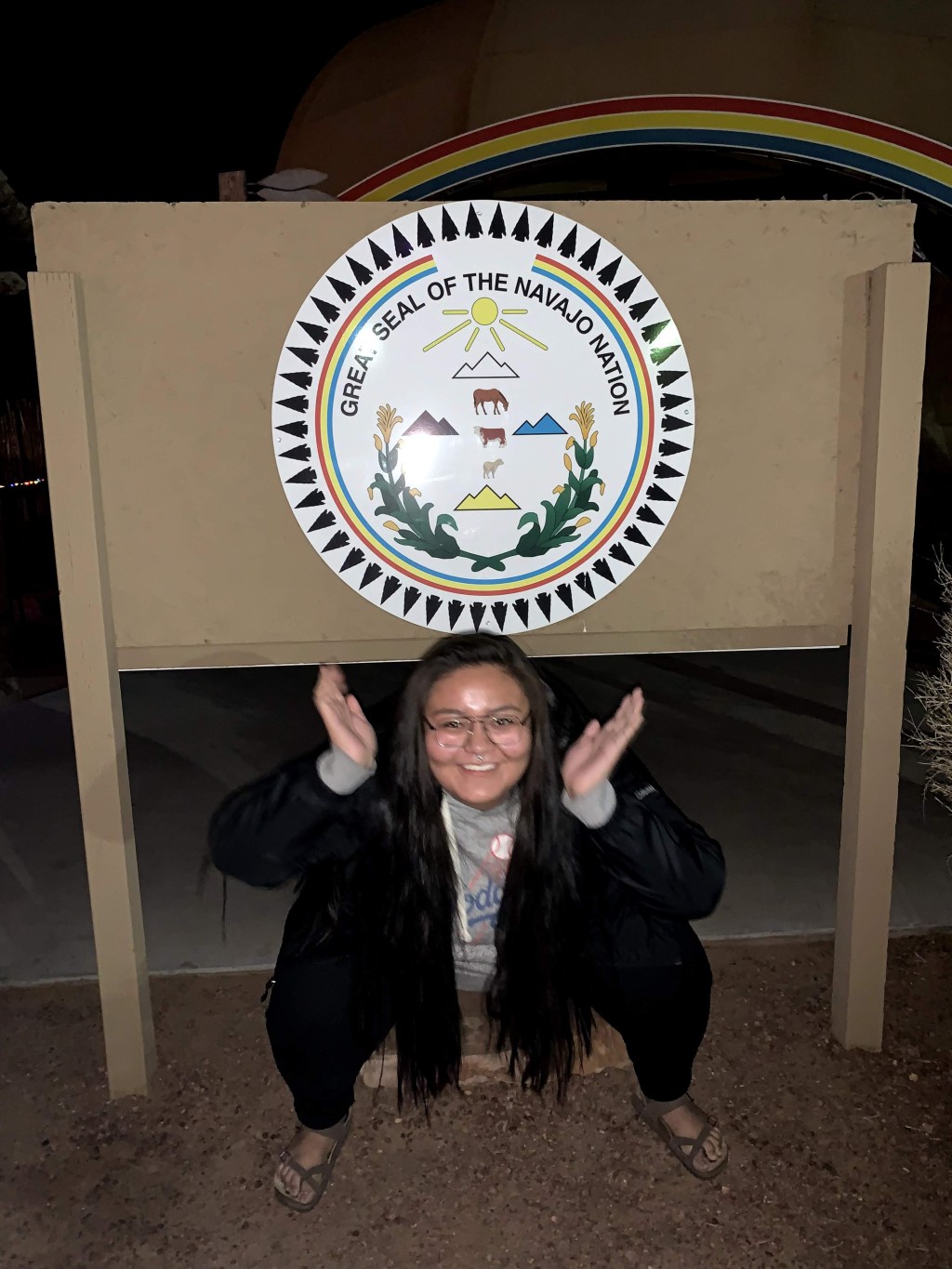
Greetings everyone and welcome back to another short story. Today’s person of the week is Megan of New Mexico. I have known Megan since my undergraduate years when I attended Northern Arizona University in Flagstaff, Arizona. Looking back, I cannot remember the exact moment when we first met each other. We may have interacted with each other through mutual friends prior, but I think it was when both another friend and I were invited to go bowling that we formally met. Megan is a true friend who you can rely on and know that she will always bring good vibes wherever she goes. After learning that she would be in town for the week, I knew I wanted to catch up and see if she would be willing to share her story for my blog. So I sent her a message and she replied that she would be able to meet with me after her work conference. And so, the meeting was set.
We met for lunch at Viet’s Pho and chowed down on some good food. We reminisced about our undergraduate years and joked about all sorts of things. See, Megan is Ma’ii Deshgizhnii in her first clan, which makes her my sister through the Navajo clan system. It wasn’t a coincidence that our humor throughout our conversation was peak-level; the Coyote Pass clan knows how to have a good time. Well, after filling our bellies we decided that she would begin sharing her story. Unfortunately, the atmosphere where we were eating was quite loud due to the lunch crowd. Therefore, we headed on over to Trifecta Coffee Company. This was a cool place, because one of the owners was making coffee truffles and gave us a free sample. He also told us about the origin of cocoa butter and the process to make it. Afterwards, we both got our coffee and Megan began sharing her story.
So Megan, Who are you?
“That’s such a loaded question. Well, we can start with where I’m from. I’m from Sanostee, New Mexico. It’s like, maybe 30 minutes south of Shiprock, off of Highway 491. But I kind of grew up all over New Mexico. So I was born in Gallup, and then my parents lived in Albuquerque for a while. So I lived in the Northeast Heights in Albuquerque, and then I also lived in Las Cruces. My mom went back to finish her bachelor’s degree at NMSU in Las Cruces. So I grew up there too, and then spent some time in Farmington, and then also Gallup. I have lived in Sanostee ever since, like 2008”.
What would you say would be your favorite place in New Mexico?
“Out of all those places—my favorite place, I think is probably gonna be Las Cruces. My parents split up when I was really young, and so when I was living in Las Cruces with my mom and my little brother, we lived with my mom’s youngest sister. And then my dad was living in Albuquerque, and he would come to see us every weekend. And I think because my parents had met in Las Cruces while they were going to NMSU, it was very much like they wanted us to experience Las Cruces the same way they did. So we were always doing things like in Mesilla and like just spending a lot of time as a family. And then my mom was also a wildlife biology student, and so our weekends were full of waking up at 4am and driving to some hiking trail to go looking for specific plant species, or going bird watching for one of her classes. It was probably the most enriching time of my childhood. And so living in Las Cruces now it feels like I’m living back home”.
Do you still like going on nature hikes and walks, or not as much?
“Not as much. I think there’s been a lot of development in Las Cruces. And so, some of the places that used to have, like little walking and hiking trails, they’ve now become neighborhoods. And so, it’s interesting but I still enjoy going to the Dripping Springs area of Las Cruces, and then also going near La Corona Park. My mom always used to take us there, so I’ve been out there a couple times.
I don’t think I’ve ever really been to Las Cruces. What are some of the fun things to do there?
“I think the fun part of being in Las Cruces is just that after living in Albuquerque for a couple years, after finishing at NAU, Albuquerque just kind of—-was so much going on. But when I went to visit Las Cruces a couple times before moving, it was just like I could be anywhere in the town, and like, I could just start talking to somebody and then make connections that way. And it was funny, because I stopped at a coffee shop right next to campus and I was talking to this family, because the kid wanted to play. Being a BMS and working with kids, I was kind of, like, making jokes with the kid and everything—and just having that ability to where life feels a little bit slower, that you can make connections with everyone, that’s what I really enjoyed. So, hanging out in Las Cruces is really nice because it’s a historic town—and a bunch of tourists come through, and you get to meet new people that way. There’s always something going on in the downtown Plaza. So they revitalize downtown—so they do, like dancing classes in the plaza. And then I am also part of some community programs where we get to find out if they’re doing movie nights at the park or movie nights at the civic center or something. And so those are some cool things too. The library does a lot of fun activities. I think for Taylor Swift’s birthday, we made bracelets, which is fun. So there’s just always something to do, even though it’s like a smaller town”.
Wow, you really put the definition into the “New Mexico Girl”. So you mentioned that you were BMS, What is that?
“So I was a Behavioral Management Specialist, and what I did was I worked at a local therapy clinic here in Albuquerque. Kids that just couldn’t behave like a neurotypical child—those were the children that I worked with. As long as they had a therapist and they were going to a school in the APS district, I was working with them hands-on in the classroom. If the kids were throwing things or hitting other people, my job was to intervene with them to help them get their needs met. Some of the interventions that proved successful included having them dance it out or helping the kids wiggle or something. Some of it was just sitting because the kid didn’t feel like they were ready to go to the next activity, or they felt overwhelmed by how many of their peers were in the room; because a lot of the kids were used to being in the special education setting with smaller classes. A lot of my job was just trying to make sure that they were okay and they felt like they were safe enough with the adults and the people in their environment to just be themselves”.
Amazing, and BMS is what you do currently, right?
“That’s what I did before. Now that I live in Las Cruces, I actually work with a nonprofit called Mesilla Valley CASA. The Casa stands for Court Appointed Special Advocates. What I do is that I am a supervisor of volunteers. With our program, the Court Appointed Special Advocates, they are people that go through a bunch of training to be able to advocate for kids that are in the foster care system due to abuse and neglect cases. So when CPS in New Mexico, when they remove children from their home, and there’s a court case filed for it, and it’s through civil court—what happens is that I will get all of the documentation for why this case has been filed. I follow up with the case and try to make sure that the kids are getting their needs met, that the treatment plans that the court in the state are ordering meet the needs for what brought the kids into care, alleviate those concerns, and then work just towards strengthening the family as a whole. And sometimes that’s not always the best option. Sometimes we get parents that are repeats—I don’t want to say offenders, but they have been in the foster system—they’ve had children that are in the foster care system multiple times. And sometimes the best option isn’t to work towards reunification. It may be adoption or it may be guardianship with someone else. And so my job is just to make sure that these kids are not getting lost in the system and not staying in foster care for a lot longer than they should be”.
And this was something you always wanted to do?
“Actually, no. So when I left Albuquerque [to Las Cruces], my whole plan was to continue to provide services in the community. But when I was applying in Las Cruces, a lot of the positions were filling pretty quickly and I didn’t get any of those opportunities to work in clinics or anything. And when I was finishing up with my last summer class, I was searching for jobs and I always thought the law was interesting and working in the court system—especially because I myself am very afraid of authority; I don’t like police officers. I get nervous thinking about if I ever got a ticket and I have to go to court for that. And so I figured, after looking through and investigating the job and what the organization does, I thought I would give it a chance. And I put that I was interested and sent an application in. And then the next morning, the program director was like, “Oh my gosh, I lived in Flagstaff too. And you know, our executive directors are here for the rest of the week; come and interview”. And then I went and interviewed the next day. Two days after I put in my application, I interviewed and I got to ask a lot of questions about what the job was. I think advocacy has always been something that I was interested in—and so being a BMS, a lot of it was advocating for what the child needs. Because, you know, schools have so many children in them, and not everyone can get their specific needs met. So a lot of what I was doing was advocating and then working with families, and trying to advocate that the family needs more support. But it’s hard to do that when you’re only supposed to be a behavioral health provider, and so it just seemed like the next step to kind of helping me fill that gap between and then working in Las Cruces—just seemed like the perfect fit to kind of understand more of the child welfare system, because I want to go into becoming a therapist for children”.
Do you see yourself being a private therapist, or working with the school? Or do you see yourself working with an organization?
“I think right now, my first initial thought is to work within an organization. And I know that they have a couple of organizations down in Las Cruces that provide a whole bunch of services. And they try to do everything in-house with doctor visits, dental and therapy and stuff. I thought about that, but I think I want to focus on gaining experience through them first. I think my ultimate goal is to eventually move back to the Four Corners area, and try to provide those same services that are always there—like grief counseling or doing play therapy and stuff—like, we have some of that, but there’s so many people that need it. And [these services are] not always readily available, and so people shouldn’t just have to wait on really long waiting lists to get the services and get the help they need”.
You say you’re in advocacy, right? Do you have any words of advice for those who are interested or are wanting to go into this path?
“Yes. I guess my advice would be to not get discouraged by your first couple of months, or even, like your first year in advocacy work. I think when I started, I kind of had an idea of what I would be doing, but I didn’t think that I would be just jumping into this deep end. And I think it’s funny, because the way that my boss hired me, she was just like, you have a ton of experience in so many different areas, but it’s your personality and the way that you were able to articulate yourself when we gave you scenarios. Being able to keep yourself composed, and like a lot of the work and advocacy can be frustrating. [Advocacy] can make you feel like you’re small and beat you down because you’re trying to make sure that other people’s best interests are being heard by someone else that makes the decisions. And so you need to focus on just being present, like even though you may have a bunch of these different other things to do. If you’re meeting with victims of crime, and being present with the person that you’re meeting with, if they’re your client, and just making that time to build that connection and relationship is going to be the biggest thing. Because even though I may be almost getting yelled at and the coordinator I’m going against everything that someone else is saying, I know that my relationship with the client is what’s important, and that they know that I stood for what they told me, and I spoke their truth, and I spoke my truth to what I know the situation of being. And it takes time to build confidence, and you know, take it slow and take a lot of care of yourself. But that relationship you build with everybody that you’re working with is going to be what also kind of empowers you to keep going; so make sure to take that time”.
Very cool. Thank you, Megan. I really appreciate that.
Well, that is it for this week’s story. I hope everyone enjoyed the story. Stay safe and have a wonderful week!

 What is Life
Leave a comment